
As drone operations expand into increasingly complex environments, understanding and managing the risks they pose to other airspace users and people on the ground is essential.
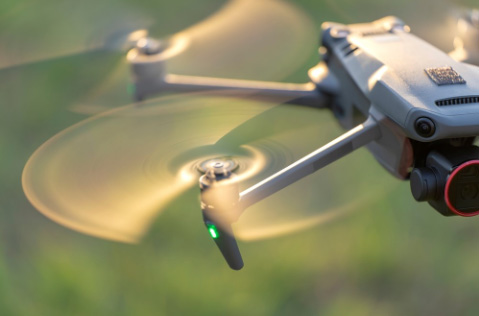
The SESAR JU-funded U-AGREE project has developed three enhanced risk models to provide a more detailed, data-driven assessment of the risks associated with drone operations.
Building on the European Union’s Specific Operations Risk Assessment (SORA) methodology, the models address three complementary dimensions: air risk, ground risk and collision risk.
The air risk model, developed with the contribution of the German Aerospace Center (DLR), uses historical traffic data to better estimate potential encounters. As Dr Miguel Ángel Fas of DLR explains, this allows for “a more accurate estimation of the presence of other traffic along the route being evaluated”. The enhanced ground risk model, developed with EuroUSC Italia, uses simulations to assess the protection offered by buildings in the event of a drone impact. Aurora Forcella, Safety and Compliance Engineer at EuroUSC Italia, highlights how the team developed “a simulation framework to provide a more realistic assessment of sheltering effects”.
The project’s collision risk model uses realistic flight trajectories and simulations to examine how traffic patterns and operational conditions influence the likelihood of conflicts between drones. “Collision risk in U-space does not depend only on how many drones are flying, but on how and where they fly,” notes Sandra Amarillo, U-space/UTM Research Engineer at the Universitat Politècnica de València, which coordinates the project.
U-AGREE has also examined how U-space services can help mitigate these risks. Simulations showed how the flight authorisation service can reduce potential conflicts by deconflicting drone trajectories before take-off. Antonietta Perfetto, project engineer at ENGage, explains that the service “substantially reduced the risk of conflicts between drones”. Together, the findings provide a stronger evidence base for more consistent risk assessments, more efficient operational approvals and the safe integration of increasingly complex drone operations into European airspace.
More about the project
More about U-space concept of operations